New Deliverable: Understanding Public and Stakeholder Risk Perceptions of Pollution in Europe
How do citizens across five European countries view pollution risks and how high is their support for environmental policies?
| January 16th, 2026 | News
How do citizens across five European countries view pollution risks and how high is their support for environmental policies?
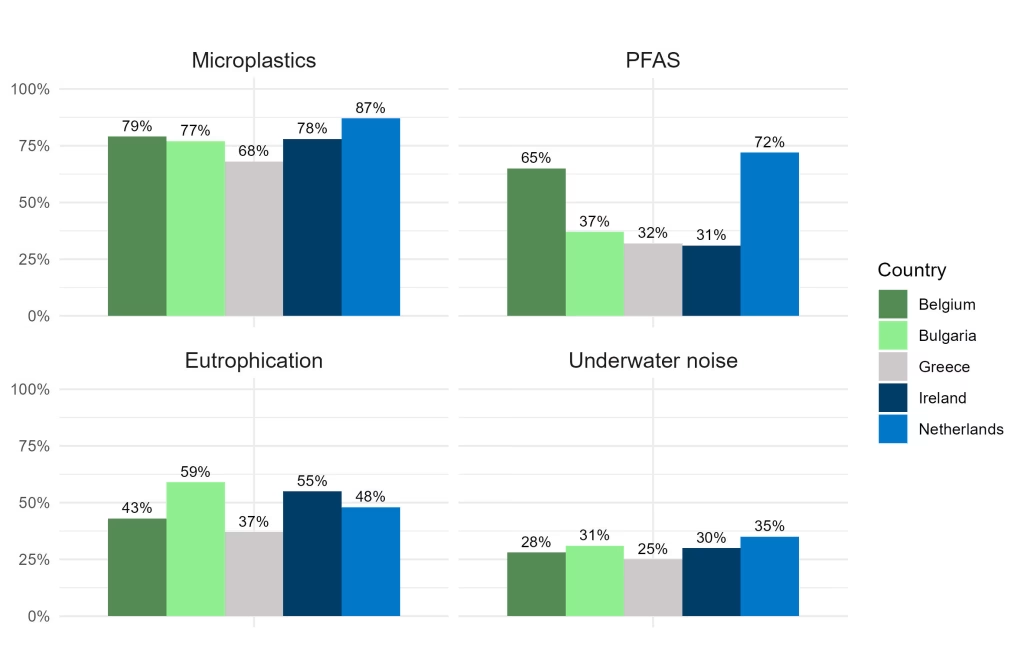
The SOS-ZEROPOL2030 project has released Deliverable D2.3, presenting the results of an extensive public and stakeholder survey across Europe that sheds new light on public perceptions of different forms of pollution and support for policy actions.
The report focuses on four key environmental pollutants central to the EU Zero Pollution ambition:
- Microplastics
- PFAS
- Eutrophication
- Underwater noise
Building on a robust social-science theoretical framework, the survey assesses personal experience, knowledge, and socio-psychological factors, concern for health and environment and support for pollution mitigation measures. Importantly, it distinguishes between the views of the general public and those of key stakeholder groups, including industry, government, NGOs, and researchers.
Key insights include:
- Clear differences in concern between pollution types with public concern highest for microplastics, followed by PFAS, eutrophication, and underwater noise.
- Concern about environmental impacts was slightly higher than concern about health impacts for all pollutant types.
- There was strong support for a range of different policy measures. But for industry, disincentives were preferred over incentives, and disincentives for consumers was the least preferred option.
- Informing citizens about environmental issues through labelling was seen as moderately trustworthy; trust in industry was rather low.
- Stakeholders tended to have higher concern than did citizens.
Variations across countries and different groups that are relevant for policy design. By combining behavioural science with environmental policy options, this deliverable provides actionable insights for policymakers, helping to design more effective, socially acceptable, and targeted environmental strategies.
The findings directly support SOS-ZEROPOL2030’s mission to accelerate the transition towards zero pollution, ensuring that future policies are not only scientifically sound but also socially supported.